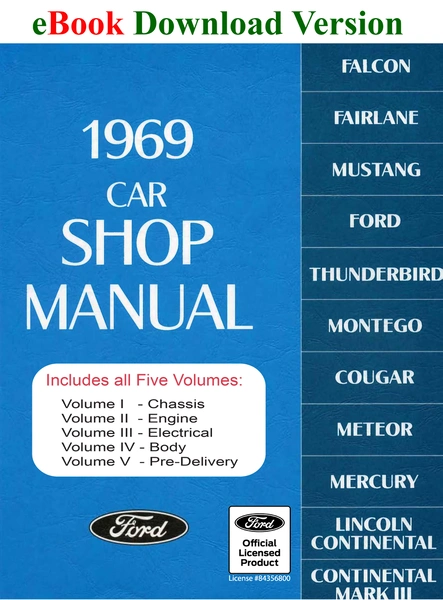
If you've ever tried to restore or maintain a classic Ford from 1969, you know the frustration of finding accurate, detailed technical information. Modern repair guides often skip over these vintage models, and online forums can be a mixed bag of opinions and guesswork. That's what makes the original 1969 Ford Car Shop Manual such an invaluable resource—it's the exact same documentation that Ford technicians used when these cars rolled fresh off the assembly line.
What You're Actually Getting in This Five-Volume Set
This isn't just another repair manual—it's a comprehensive technical library originally published by Ford Motor Company in November 1968. The first volume alone covers the complete chassis systems: wheels, tires, suspension, steering, brakes, clutch, transmission, and rear axle. When you're dealing with the unique engineering of a '69 Thunderbird's suspension or troubleshooting brake issues on a Mustang, you need specifications that match the original equipment, not generic estimates.
The manual covers an impressive lineup that represents Ford's entire 1969 passenger car range: Falcon, Fairlane, Mustang, Ford full-size models, Thunderbird, Montego, Cougar, Meteor, Mercury, Lincoln Continental, and Continental Mark III. Each vehicle gets model-specific information where it matters most.
Why the VIN Decoding Section Is More Valuable Than You'd Think
Here's something many classic car owners don't realize: accurately identifying your vehicle's original specifications can make or break a restoration. The manual includes detailed VIN and warranty plate decoding that tells you exactly what your car left the factory with. For a 1969 Cougar, for instance, the warranty plate reveals your original paint color, interior trim code, manufacturing date, and drivetrain specs—all encoded in that alphanumeric sequence on your door lock panel.
This matters when you're sourcing parts or verifying authenticity. If you're considering purchasing a '69 Mustang that's supposedly an original GT, this manual shows you how to decode the body serial and style codes to verify the claim. There's real money at stake when authenticity determines value.
The Interior Trim Code Mystery Solved
One of the most frustrating aspects of restoring a classic Ford is figuring out the correct interior. Was your Lincoln Continental originally trimmed in black leather or vinyl? What color combination did that Cougar XR-7 actually have? The manual includes comprehensive interior trim codes covering every color and material combination—from standard vinyl bench seats to luxury leather bucket seats.
These aren't generic descriptions either. You'll find specific codes like "1A" or "5G" that correspond to exact color combinations: aqua vinyl with cloth inserts, nugget gold knit, saddle leather—the complete palette of late-'60s automotive interior design. This level of detail is essential for period-correct restorations or even just repairing worn upholstery with the right replacement materials.
Technical Specs That Still Matter Today
Beyond identification codes, this manual provides the actual service procedures and specifications you need. Rear axle ratios, transmission variants, torque specifications—these aren't things you can guess at when you're reassembling a differential or adjusting brake systems. The manual was written for professional mechanics who needed to diagnose problems and make repairs correctly the first time.
What makes this resource particularly valuable is that it represents Ford's official documentation before computers dominated automotive diagnostics. Everything is explained in clear, methodical procedures that assume you're working with basic shop tools, not specialized electronic equipment.
The Bottom Line for Ford Enthusiasts
Whether you're keeping a beloved family Mercury running, restoring a Mustang to showroom condition, or just maintaining a classic Thunderbird, having factory-original technical documentation isn't just helpful—it's essential for doing the job right. This manual provides the authoritative answers that online searches and generic repair guides simply can't match. It's the difference between guessing and knowing exactly what Ford engineers intended.