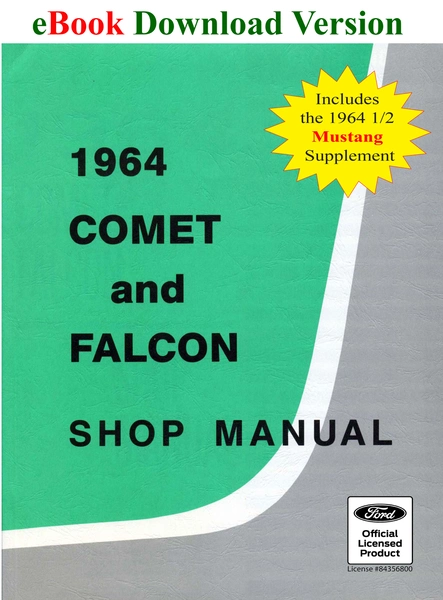
If you've ever cracked open the hood of a 1964 Ford Comet, Falcon, or first-generation Mustang, you know these classics come with their own set of quirks and challenges. While they're beautifully simple compared to today's computer-laden vehicles, keeping them running smoothly requires something that's increasingly hard to find: the actual knowledge Ford's own technicians used back in the day.
Why This Manual Matters More Than You'd Think
The 1964 shop manual isn't just another repair guide—it's the diagnostic bible that dealership mechanics relied on when these cars were brand new. What makes it indispensable is the level of specificity you simply won't find anywhere else. For instance, when you're troubleshooting power brakes, the manual provides a precise testing procedure: with the engine off, pump the brake pedal several times to deplete the vacuum, then start the engine. If everything's working correctly, the pedal should fall away under reduced pressure. It's these exact, no-guesswork procedures that separate successful repairs from frustrating trial-and-error sessions.
Decoding Your Classic Ford's DNA
One of the manual's hidden gems is its comprehensive vehicle identification system. That serial number stamped on your left cowl strut isn't just random digits—it's a complete biography of your car. The manual teaches you how to decode everything from the assembly plant (was your Comet built in Lorain, Los Angeles, or Metuchen?) to the exact build date, rear axle ratio, and transmission type. There's even a separate warranty plate on the left front door panel with paint and trim codes. This information becomes invaluable when you're hunting for correct replacement parts or documenting your car's provenance for shows or resale.
The Self-Adjusting Brake Mystery Solved
Here's something that trips up many restorers: these Fords featured relatively new self-adjusting brake technology in 1964. The manual explains how the cable-and-lever mechanism automatically adjusts brake shoes—but only when you apply the brakes during rearward movement. If you're experiencing brake issues, understanding this system is crucial. The manual specifies that brake shoes must be replaced when lining wears to within 1/32 inch of rivet heads, and it's adamant about replacing in complete axle sets, not individual wheels.
Critical Maintenance Details You Can't Afford to Miss
The manual's maintenance sections reveal procedures that prevent costly mistakes. Take brake bleeding, for example: pressure should be maintained between 10-30 psi, starting with the longest lines first, and the master cylinder reservoir must stay filled to within ¾ inch from the top throughout the process. Get this wrong, and you'll be chasing air bubbles for hours.
There's also a crucial adjustment for power brake systems that many people overlook—the master cylinder push rod clearance. The manual specifies this should ideally have no movement, with a maximum of 0.015 inch between the booster control valve plunger and master cylinder piston. Too much clearance causes excessive pedal travel; too little creates brake drag that'll wear out your shoes prematurely.
More Than Just Wrenches and Torque Specs
What truly sets this manual apart is how it captures the engineering philosophy of an era when cars were designed to be serviced, not replaced. The cleaning protocols alone—requiring metal parts to be washed in solvent, rinsed, then rewashed in clean alcohol before assembly—reflect a level of precision and care that's become rare in modern repair work.
For anyone seriously committed to maintaining one of these classic Fords, this manual transforms you from parts-replacer to informed technician. It's the difference between knowing what to do and understanding why you're doing it—and in the world of vintage car restoration, that understanding is everything.