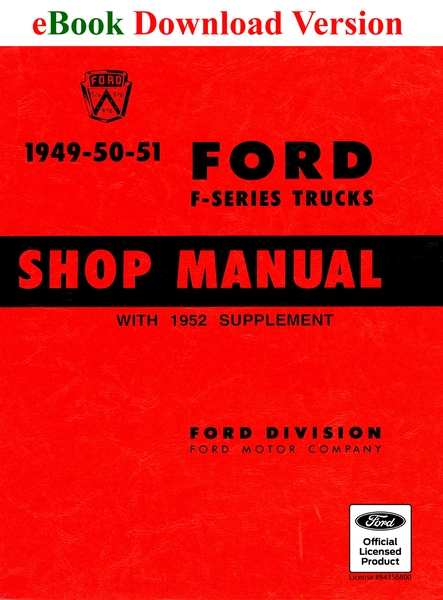
If you've ever tried tracking down repair information for a vintage Ford F-Series truck, you know the frustration of piecing together information from multiple sources. The 1949-52 Ford Truck Shop Manual changes all that—and what's fascinating is how Ford's engineers organized this technical bible to serve two very different audiences simultaneously.
Why Ford Split This Manual Into Two Worlds
Here's something most people miss: Ford didn't create just another repair manual. They built a dual-purpose reference that acknowledged the reality of their service network. Parts One through Four dive deep into comprehensive repair procedures—the kind of information you'd need when rebuilding an engine or overhauling a transmission. But Part Five? That's where Ford's practical genius shows through.
Part Five consolidates all the quick-service information—maintenance schedules, troubleshooting charts, and critical specifications—into one location. Why does this matter? Because in 1949, Ford dealerships employed both career mechanics doing major overhauls and quick-service technicians handling routine maintenance. Rather than forcing everyone to flip through hundreds of pages, Ford created a fast-access section that became invaluable for anyone doing regular upkeep. It's this thoughtful organization that makes the manual just as useful today for home restorers.
The Engine Coverage That Actually Makes Sense
One of the manual's smartest features is how it handles the multiple engine options available across the F-Series lineup. You're not wading through redundant information repeated for each engine type. Instead, Ford consolidated common procedures—like engine removal and installation—into tolerance charts and standardized steps, then branched into engine-specific procedures only when necessary.
Take engine removal, for instance. Whether you're pulling an H-Series six-cylinder from a conventional F-1 or extracting an E-Series V8 from a Cab-Over-Engine model, the preliminary steps remain consistent: drain fluids, disconnect the battery, remove hoses and linkages. But here's where it gets interesting—the manual then diverges into body-style-specific procedures because a C.O.E. model requires removing the entire grille and radiator support assembly, while conventional trucks don't. This approach saves time and reduces confusion.
Technical Details That Prevent Expensive Mistakes
The manual doesn't just tell you what to do—it explains the tolerances that determine whether a component passes inspection or needs replacement. Consider valve maintenance, which is critical for these engines. The manual specifies exact stem-to-guide clearances that vary by engine type: R-Series engines have different tolerances than H, M, or E-Series models. Exceed these clearances, and you're looking at valves that stick or make excessive noise.
There's also practical wisdom embedded throughout. When installing valve seat inserts, the manual instructs you to chill them with dry ice before pressing them into the cylinder block—a technique that uses thermal contraction to ensure a proper interference fit. These aren't just procedures; they're solutions to real-world problems that Ford engineers encountered and solved.
What Makes This Manual Essential Today
The 1949-52 F-Series trucks represent a pivotal moment in Ford's history—these were the first truly modern pickup trucks with integrated cab and fender designs. They're increasingly collectible, which means there's a growing community of owners who need authentic, factory-level information to restore and maintain them properly.
What sets this manual apart is its completeness. The 1952 supplement ensures you've got coverage for all four model years in one reference. Whether you're diagnosing a fuel system issue, setting valve clearances, or torquing transmission bolts to the proper 40-50 foot-pounds, you've got Ford's original specifications—not someone's best guess posted on a forum.
For anyone serious about keeping these classic Ford trucks running authentically, this manual isn't just helpful—it's the foundation of doing the job right.